Definition and etymology
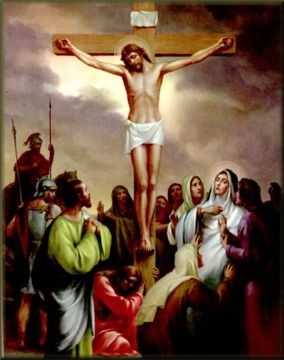
Good Friday, called Feria VI in Parasceve in the Roman Missal, he hagia kai megale paraskeue (the Holy and Great Friday) in the Greek Liturgy, Holy Friday in Romance Languages, Charfreitag (Sorrowful Friday) in German, is the English designation of Friday in Holy Week — that is, the Friday on which the Church keeps the anniversary of the Crucifixion of Jesus Christ.
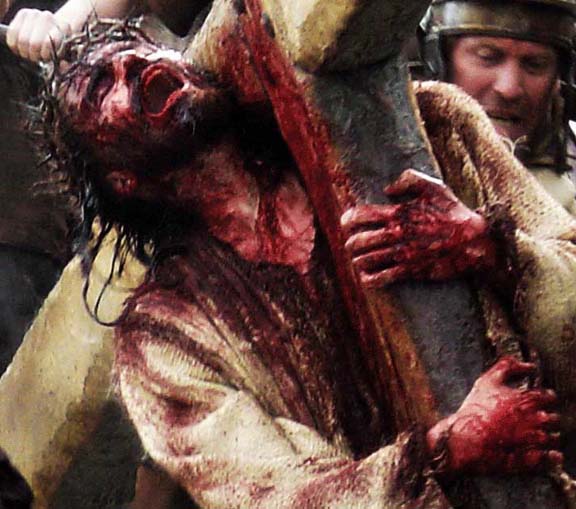
Parasceve, the Latin equivalent of paraskeue, preparation (i.e. the preparation that was made on the sixth day for the Sabbath; see Mark 15:42), came by metonymy to signify the day on which the preparation was made; but while the Greeks retained this use of the word as applied to every Friday, the Latins confined its application to one Friday. Irenaeus and Tertullian speak of Good Friday as the day of the Pasch; but later writers distinguish between the Pascha staurosimon (the passage to death), and the Pascha anastasimon (the passage to life, i.e. the Resurrection). At present the word Pasch is used exclusively in the latter sense. The two Paschs are the oldest feasts in the calendar.
From the earliest times the Christians kept every Friday as a feast day; and the obvious reasons for those usages explain why Easter is the Sunday par excellence, and why the Friday which marks the anniversary of Christ's death came to be called the Great or the Holy or the Good Friday. The origin of the term Good is not clear. Some say it is from "God's Friday" (Gottes Freitag); others maintain that it is from the German Gute Freitag, and not specially English. Sometimes, too, the day was called Long Friday by the Anglo-Saxons; so today in Denmark.
Office and ceremonial
There is, perhaps, no office in the whole liturgy so peculiar, so interesting, so composite, so dramatic as the office and ceremonial of Good Friday.

About the vigil office, which in early times commenced at midnight in the Roman, and at 3 a.m. in the Gallican Church, it will suffice to remark that, for 400 years past, it has been anticipated by five or six hours, but retains those peculiar features of mourning which mark the evening offices of the preceding and following day, all three being known as the Tenebrae.
The morning office is in three distinct parts. The first part consists of three lessons from Sacred Scripture (two chants and a prayer being interposed) which are followed by a long series of prayers for various intentions; the second part includes the ceremony of unveiling and adoring the Cross, accompanied by the chanting of the Improperia; the third part is known as the Mass of the Presanctified, which is preceded by a procession and followed by vespers. Each of these parts will be briefly noticed here.
The Hour of None being finished, the celebrant and ministers, clothed in black vestments, come to the altar and prostrate themselves for a short time in prayer. In the meantime, the acolytes spread a single cloth on the denuded altar. No lights are used.
When the celebrant and ministers ascend the altar, a lector takes his place on the epistle side, and reads a lesson from Osee 6. This is followed by a tract sung by the choir. Next comes a prayer sung by the celebrant, which is followed by another lesson from Exodus 12, chanted by the subdeacon. This is followed by another tract (Psalm 139), at the close of which the third lesson, viz. the Passion according to St. John, is sung by the deacons or recited from a bare pulpit --"dicitur passio super nudum pulpitum".

When this is finished, the celebrant sings a long series of prayers for different intentions, viz. for the Church, pope, bishop of the diocese, for the different orders in the Church, for the Roman Emperor (now omitted outside the dominions of Austria), for catechumens .... The above order of lessons, chants, and prayers for Good Friday is found in our earliest Roman Ordines, dating from about A.D. 800. It represents, according to Duchesne (234), "the exact order of the ancient synaxes without a liturgy", i.e. the order of the earliest Christian prayer meetings, at which, however, the liturgy proper, i.e. the Mass, was not celebrated. This kind of meeting for worship was derived from the Jewish Synagogue service, and consisted of lessons, chants, and prayers. In the course of time, as early perhaps as A.D. 150 (see Cabrol's "Origines Liturgiques" 137), the celebration of the Eucharist was combined with this purely euchological service to form one solemn act of Christian worship, which came to be called the Mass. It is to be noted that the Mass is still in two parts, the first consisting of lessons, chants, and prayers, and the second being the celebration of the Eucharist (including the Offertory, Canon, and Communion). While the Judica, introit, and the Gloria in Excelsis have been added to this first part of the Mass and the long series of prayers omitted from it, the oldest order of the Synaxis, or meeting without Mass, has been retained in the Good Friday service. The form of the prayers deserves to be noticed. Each prayer in three parts.
* The celebrant invites the congregation to pray for a specified intention.
* The deacon then says "Let us kneel" (Flectamus genua); then the people were supposed to pray for a time kneeling in silence, but at present immediately after the invitation to kneel the subdeacon invites them to stand up (Levate).
* The celebrant collects, as it were, all their prayers, and voices them aloud.
The modern collect is the representative of this old solemn form of prayer. The first part is reduced to the Oremus, the second part has disappeared, and the third part remains in its entirety and has come to be called the collect. It is curious to note in these very old Good Friday prayers that the second part is omitted in the prayers for the Jews, owing, it is said, to their having insulted Christ by bending the knee in mockery before Him. These prayers were not peculiar to Good Friday in the early ages (they were said on Spy Wednesday as late as the eighth century); their retention here, it is thought, was inspired by the idea that the Church should pray for all classes of men on the day that Christ died for all. Duchesne (172) is of opinion that the Oremus now said in every Mass before the Offertory, which is not a prayer, remains to show where this old series of prayers was once said in all Masses.
Adoration of the Cross
The dramatic unveiling and adoration of the Cross, which was introduced into the Latin Liturgy in the seventh or eighth century, had its origin in the Church of Jerusalem. The "Peregrinatio Sylviae" (the real name is Etheria) contains a description of the ceremony as it took place in Jerusalem towards the close of the fourth century.

Then a chair is placed for the Bishop in Golgotha behind the Cross... a table covered with a linen cloth is placed before him; the Deacons stand around the table, and a silver-gilt casket is brought in which is the wood of the holy Cross. The casket is opened and (the wood) is taken out, and both the wood of the Cross and the Title are placed upon the table. Now, when it has been put upon the table, the Bishop, as he sits, holds the extremities of the sacred wood firmly in his hands, while the Deacons who stand around guard it. It is guarded thus because the custom is that the people, both faithful and catechumens, come one by one and, bowing down at the table, kiss the sacred wood and pass on. (Duchesne, tr. McClure, 564)
Our present ceremony is an obvious development of this, the manner of worshipping the True Cross on Good Friday observed at Jerusalem. A veiled image of the Crucifix is gradually exposed to view, while the celebrant, accompanied by his assistants, sings three times the "Ecce lignum Crucis", etc. (Behold the wood of the Cross on which hung the salvation of the world), to which the choir answers, each time, "Venite adoremus" (Come let us adore). During the singing of this response the whole assembly (except the celebrant) kneel in adoration. When the Cross is completely unveiled the celebrant carries it to the foot of the altar, and places it in a cushion prepared for it. He then takes off his shoes and approaches the Cross (genuflecting three times on the way) and kisses it. The deacon and subdeacon also divest themselves of their shoes (the deacon and subdeacon may take off their shoes, if that be the custom of the place, S.C.R., n. 2769, ad X, q. 5), and act in like manner. For an account of the peculiarly impressive ceremony known as the "Creeping to the Cross", which was once observed in England, see article CROSS. The clergy two and two follow, while one or two priests vested in surplice and black stole take crosses and present them to the faithful present to be kissed. During this ceremony the choir sings what are called Improperia, the Trisagion (in Greek as well as Latin), if time permits the hymn Crux fidelis ...(Oh, Cross, our hope...). The Improperia are a series of reproaches supposed to be addressed by Christ to the Jews. They are not found in the old Roman Ordines. Duchesne (249) detects, he thinks, a Gallican ring in them; while Martene (III, 136) has found some of them alternating with the Trisagion in ninth century Gallican documents. They appear in a Roman Ordo, for the first time, in the fourteenth century, but the retention of the Trisagion in Greek goes to show that it had found a place in the Roman Good Friday service before the Photian schism (ninth century).

A non-Catholic may say that this is all very dramatic and interesting, but allege a grave deordination in the act of adoration of the Cross on bended knees. Is not adoration due to God alone? The answer may be found in our smallest catechism. The act in question is not intended as an expression of absolute supreme worship (latreia) which, of course, is due to God alone. The essential note of the ceremony is reverence (proskynesis) which has a relative character, and which may be best explained in the words of the Pseudo-Alcuin: "Prosternimur corpore ante crucem, mente ante Dominium. Veneramur crucem, per quam redempti sumus, et illum deprecamur, qui redemit" (While we bend down in body before the cross we bend down in spirit before God. While we reverence the cross as the instrument of our redemption, we pray to Him who redeemed us). It may be urged: why sing "Behold the wood of the Cross", in unveiling the image of the Cross? The reason is obvious. The ceremony originally had immediate connexion with the True Cross, which was found by St. Helena in Jerusalem about the year A.D. 326. Churches which procured a relic of the True Cross might imitate this ceremony to the letter, but other churches had to be with an image which in this particular ceremony represents the wood of the True Cross.

As might be expected, the ceremony of the unveiling and adoration of the Cross gave rise to peculiar usages in particular Churches. After describing the adoration and kissing of the Cross in the Anglo-Saxon Church, Rock (The Church of Our Fathers, IV, 103) goes on to say: "Though not insisted on for general observance, there was a rubric that allowed a rite, at this part of the office, to be followed, which may be called The Burial of the Rood. At the hind part of the altar ... there was made a kind of sepulchre, hung all about with a curtain. Inside this recess...the cross, after the ceremony of kissing it had been done, was carried by its two deacons, who had, however, first wrapped it up in a linen cloth or winding-sheet. As they bore their burden along, they sang certain anthems till they reached this spot, and there they left the cross; and it lay thus entombed till Easter morn, watched all that while by two, three, or more monks, who chanted psalms through day and night. When the Burial was completed the deacon and subdeacon came from the sacristy with the reserved host. Then followed The Mass of the Pre-sanctified. A somewhat similar ceremony (called the Apokathelosis) is still observed in the Greek Church. An image of Christ, laid on a bier, is carried through the streets with a kind of funeral pomp, and is offered to those present to be worshipped and kissed.

Mass of the presanctified
To return to the Roman Rite, when the ceremony of adoring and kissing the Cross is concluded, the Cross is placed aloft on the altar between lighted candles, a procession is formed which proceeds to the chapel of repose, where the second sacred host consecrated in yesterday's Mass has since lain entombed in a gorgeously decorated urn and surrounded by lights and flowers. This urn represents the sepulchre of Christ (decree of S.C.R., n. 3933, ad I). The Most Holy Sacrament is now carried back to the altar in solemn procession, during which is sung the hymn "Vexilla Regis prodeunt" (The standards of the King advance). Arrived in the sanctuary the clergy go to their places retaining lighted candles, while the celebrant and his ministers ascend the altar and celebrate what is called the Mass of the Presanctified. This is not a Mass in the strict sense of the word, as there is no consecration of the sacred species. The host which was consecrated in yesterday's Mass (hence the word presanctified) is placed on the altar, incensed, elevated ("that it may be seen by the people"), and consumed by the celebrant. It is substantially the Communion part of the Mass, beginning with the "Pater noster" which marks the end of the Canon. From the very earliest times it was the custom not to celebrate the Mass proper on Good Friday. Speaking about this ceremony Duchesne (249) says,
It is merely the Communion separated from the liturgical celebration of the Eucharist properly so called. The details of the ceremony are not found earlier than in books of the eighth or ninth century, but the service must belong to a much earlier period. At the time when synaxes without liturgy were frequent, the 'Mass of the Presanctified' must have been frequent also. In the Greek Church it was celebrated every day in Lent except on Saturdays and Sundays, but in the Latin Church it was confined to Good Friday.

At present [1909] the celebrant alone communicates, but it appears from the old Roman Ordines that formerly all present communicated (Martene, III, 367). The omission of the Mass proper marks in the mind of the Church the deep sorrow with which she keeps the anniversary of the Sacrifice of Calvary. Good Friday is a feast of grief. A black fast, black vestments, a denuded altar, the slow and solemn chanting of the sufferings of Christ, prayers for all those for whom He died, the unveiling and reverencing of the Crucifix, these take the place of the usual festal liturgy; while the lights in the chapel of repose and the Mass of the Presanctified is followed by the recital of vespers, and the removal of the linen cloth from the altar ("Vespers are recited without chant and the altar is denuded").
Other ceremonies
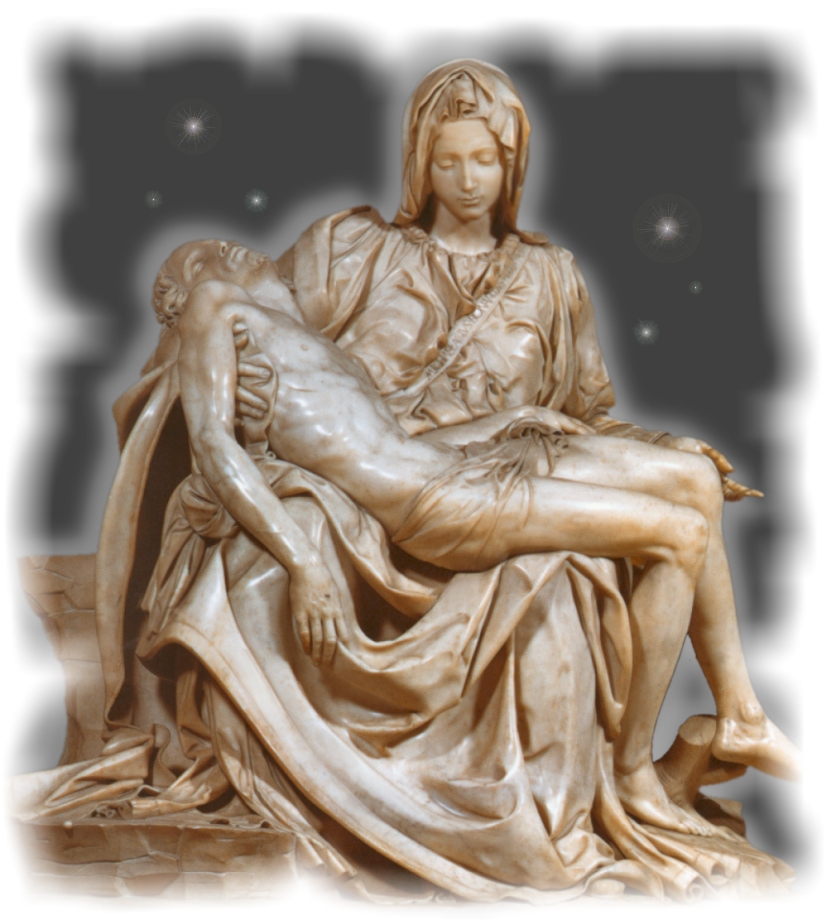
The rubrics of the Roman Missal prescribe no further ceremonial for this day, but there are laudable customs in different churches which are allowed. For example, the custom (where it exists) of carrying in procession a statue of Our Lady of Sorrows is expressly permitted by decrees of the S. Con. of Rites (n. 2375, and n. 2682); also the custom (where it exists) of exposing a relic of the Holy Cross on the high altar (n. 2887), and the custom of carrying such a relic in procession within the walls of the church, not, however, during the usual ceremonies (n. 3466), are expressly permitted. Rock (op. cit. 279, 280) notes, with interesting detail, a custom followed at one time in England of submitting voluntarily to the rod of penance on Good Friday.